A girls’ pageant dress can look flawless on a hanger, then arrive with sharp lines across the skirt. Wrinkles are rarely random. Compression, friction, humidity, and trapped heat usually create them during travel.
The travel industry is moving more people and more luggage. IATA’s 2024 passenger forecast projected nearly 4.96 billion air travelers worldwide. That growth makes reliable garment protection increasingly practical, not optional. Textile Exchange’s Materials Market Report 2024 also reported that polyester represented about 57% of global fiber production in 2023. Polyester resists some creasing, but satin, tulle, lining layers, and sequin panels can still fold permanently under pressure.
Pageant dresses are especially vulnerable. A packed gown may sit beneath shoes, cosmetics, or a heavy coat. Beaded shoulders can press into soft netting. A warm car trunk can intensify set-in creases. Small details matter.
Textile professionals evaluate wrinkle recovery through standards such as AATCC TM128, which helps compare how fabrics recover after controlled wrinkling. However, laboratory results cannot fully predict a child’s real travel day. Suitcase size, folding skill, climate, and airport handling all change the outcome. That limitation deserves attention.
This guide explains how to pack girls pageant dresses for travel without wrinkling, using garment construction, fabric behavior, and practical packing experience. It will examine breathable garment bags, acid-free tissue, structured layers, and careful placement. Some methods work beautifully. Others need adjustment. Testing the packing method before competition day remains the safest choice.
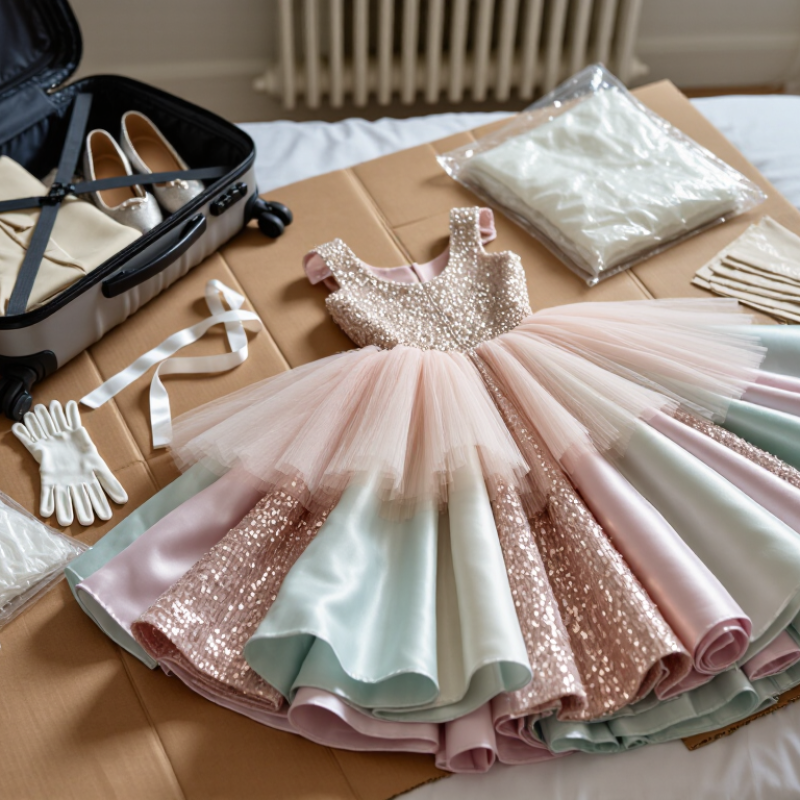
A girls’ pageant dress may leave a suitcase covered in sharp lines and soft, crushed folds. Fabric choice often explains why. Satin, especially lightweight satin, reflects every crease under stage lighting. Polyester satin resists wrinkles better than silk, but tight packing can still flatten its smooth surface. Silk feels luxurious, yet it marks easily and may need careful steaming. Not every crease comes from careless packing.
Taffeta has a crisp structure, so it can hold its shape reasonably well. However, pressure may create stubborn horizontal ridges. Organza and chiffon are lighter and usually recover faster, though their thin layers can wrinkle around the waist and sleeves. Tulle often survives packing better than expected, but folded netting may develop uneven waves. Velvet is another concern. Its soft pile can become crushed, making the fabric appear darker in certain areas. It is not always predictable.
Stretch fabrics containing spandex may resist deep wrinkles, but they can show pressure lines near fitted seams. Rayon wrinkles easily because its fibers absorb moisture. Polyester blends are often more practical for travel, especially when the skirt includes several layers. Embellishments add weight and create stress points.
Fabric knowledge helps, but packing conditions matter too. A hot car, damp hotel room, or overfilled garment bag can change the result. Hang the dress immediately after arrival. Use a breathable cover, avoid sharp folds, and test steam on an inner seam first. I once assumed a heavier fabric would travel better; the compressed waist proved otherwise.
| Fabric Type | Common Dress Use | Wrinkle Susceptibility | Wrinkle Recovery | Typical Packed Appearance | Why Wrinkles Form | Travel-Packing Recommendation |
|---|---|---|---|---|---|---|
| Polyester Satin | Skirts, bodices, trim | Low to moderate | Good | Light fold lines | Synthetic polyester fibers generally resist moisture-related creasing, but sharp folds can remain visible because the smooth surface reflects light. | Roll loosely or fold over tissue paper; hang immediately after arrival and use low-temperature steam if needed. |
| Silk Satin | Luxury skirts, sashes | High | Fair | Noticeable creases | Silk fibers have lower elastic recovery than many synthetic fibers, so compression and tight folds can leave lasting creases. | Use a wide garment bag, avoid tight compression, and keep the fabric away from sharp embellishments. |
| Chiffon | Overlays, sleeves, skirts | Moderate to high | Fair | Soft ripples and fold marks | Its lightweight, open construction allows the fabric to collapse easily when compressed inside luggage. | Layer flat with acid-free tissue, avoid heavy items on top, and hang in a steamy bathroom before the event. |
| Organza | Overskirts, bows, sleeves | Moderate | Fair to good | Sharp lines or crushed volume | The crisp, sheer structure holds shape, which also means compression can create pronounced fold lines. | Pack flat with tissue between layers and restore volume by hanging the garment rather than pressing it flat. |
| Tulle | Full skirts, petticoats | Low for flat creases; high for crushing | Good | Flattened or tangled layers | The mesh resists traditional wrinkles but can become compressed, twisted, or uneven when tightly packed. | Stuff the skirt lightly with tissue, place it in a large garment bag, and never compress it under heavy luggage. |
| Velvet | Bodices, collars, accents | Moderate to high | Poor to fair | Pile marks and pressure shading | Pressure changes the direction of the raised pile, creating marks that may look like wrinkles even when the base fabric is smooth. | Avoid folding the pile against itself; hang the garment and use steam from the reverse side without pressing the surface. |
| Jersey Knit | Fitted dresses, lining | Low | Very good | Minor temporary folds | The knitted construction and stretch allow the fabric to recover after being removed from a suitcase. | Roll rather than sharply fold, avoid overpacking, and allow the garment to rest on a hanger. |
| Crepe | Dresses, skirts, panels | Moderate | Good | Soft, less-reflective creases | The textured surface disguises minor wrinkles, but prolonged compression can still set folds. | Fold with tissue, keep the dress loosely packed, and hang it for several hours before steaming lightly. |
| Lace | Overlays, sleeves, details | Moderate | Fair to good | Distorted motifs or ripples | The open pattern can resist flat creasing, but folds may distort the design or catch on other garments. | Place tissue between lace and embellishments, avoid snagging, and hang without pressing directly on the motifs. |
| Sequin-Embellished Fabric | Bodices, skirts, stage details | Depends on base fabric | Fair | Visible folds and crushed shine | Sequins can lock together, catch on fabric, or reflect light unevenly when the underlying material is folded. | Turn the dress inside out when appropriate, cushion it with tissue, and avoid ironing or direct high heat. |
Rating guide: Wrinkle susceptibility and recovery are comparative textile characteristics. Actual results vary with fiber content, fabric weight, weave or knit construction, lining, embellishments, packing pressure, humidity, and time spent compressed.
Folding presses delicate layers against each other. Suitcase edges can leave matching horizontal lines. Moisture and heat may deepen creases. It happens.
Lightweight satin reflects every crease under bright lights. Silk marks easily and may need careful steaming. Rayon absorbs moisture and wrinkles quickly. Velvet can show crushed, darker patches.
Taffeta usually keeps its shape well. Tulle often survives packing better than expected. Polyester blends can be practical for layered skirts. Results still vary.
Avoid pressing the bodice flat. Boning, padding, and lining can create hard stress lines. Fold along natural seams instead. Keep soft tissue around structured areas.
Yes, clean tissue can reduce friction between sequins and fabric. Place it between delicate layers and decorative trims. Do not pack the dress too tightly. Too much tissue can also create pressure.
Usually, no. Vacuum bags can crush volume, ruffles, and delicate decorations. A firm garment case offers better support. An overfilled case may still create new creases.
Hang the dress immediately in a cool, dry room. Let the skirt relax for several hours. Use a breathable cover. Inspect the care label before applying steam.
Test gentle steam on a hidden inner seam. Keep heat away from glue, crystals, and glued hems. Never press decorations directly. A professional specialist should assess severe or uncertain damage. I once trusted heavier fabric too much. The waist still arrived compressed.
Girls’ pageant dresses can wrinkle during travel because different fabrics respond differently to pressure, folding, heat, and moisture. Satin, tulle, chiffon, and other delicate materials may crease easily, while layered skirts and structured bodices can develop stubborn lines when compressed. Sequins, beading, appliqués, boning, and molded details can also create uneven pressure points, making careful packing especially important. Long periods inside a suitcase, changing temperatures, humidity, and limited airflow may further set wrinkles into the fabric.
Learning how to pack girls pageant dresses for travel without wrinkling involves using clean tissue paper, a breathable garment bag, and gentle folds that follow the dress’s natural shape. Avoid overpacking, tight compression, and placing heavy items on top. During transport, keep the dress dry and protected from sharp objects. After arrival, hang it immediately and allow the fabric to relax. Light steaming, careful air circulation, or professional garment care can help restore its appearance without damaging delicate decorations or structured layers.

 Darias Dress