When shoppers compare China’s top 10 tutu dresses with tulle dresses, the names can create confusion. The fabrics may look similar, but their construction often differs significantly. This guide asks, “what is the difference between a tutu dress and a tulle dress,” using practical details from design, manufacturing, and retail experience.
Fashion textile author Gail Baugh offers a useful explanation: “Tulle is the fabric; a tutu is the form created from it.” A tutu dress usually has several short, structured layers. These layers create a rounded, lifted shape around the waist or hips. Many designs use elastic bands, gathered strips, or netting underneath. A tulle dress may use the same fabric, but its skirt often falls softly. It can appear long, flowing, layered, or lightly gathered.
The difference is not always obvious. It depends on length, lining, stitching, and volume. Some Chinese manufacturers describe a dramatic tulle dress as a tutu dress for marketing purposes. That choice can mislead buyers. Product photos may also hide scratchy edges, uneven gathers, or weak waist seams. A closer inspection matters.
A well-made tutu dress should recover its shape after movement. Its layers should remain balanced. A tulle dress should feel comfortable against the skin, especially when worn for hours. Buyers should check fabric density, lining quality, waistband strength, and washing instructions. Price alone proves little. A cheaper design may use rough tulle, while a higher-priced dress may still have poor finishing. That is worth remembering. This comparison helps readers evaluate China’s leading options with clearer expectations, not just attractive images.
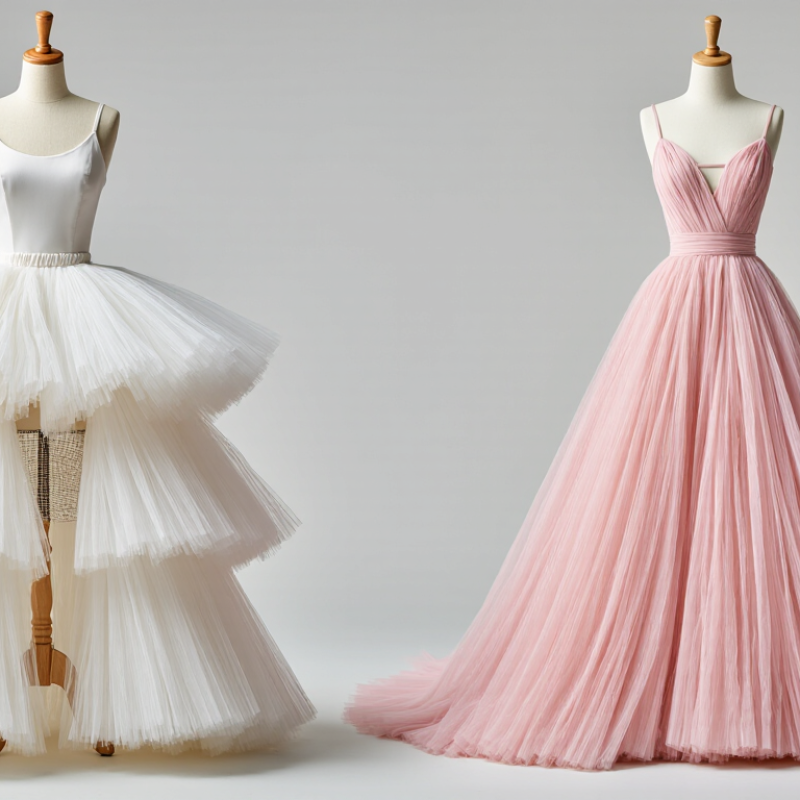
A tutu dress is defined by shape and movement, not only by its fabric. It usually has a fitted bodice and a short, lifted skirt with several stiff layers. The skirt projects from the waist, creating a clear ballet-inspired outline. Tulle is the material. It is a lightweight net fabric made from synthetic or natural fibers. A tulle dress may have a soft overlay, a flowing skirt, or only small tulle details on sleeves and collars. It can look romantic rather than theatrical.
In production, Chinese garment suppliers often adjust tulle density, layer counts, and waistband construction for different uses. Dancewear needs firm recovery and secure seams. Occasion dresses usually need softer drape and comfortable lining. The difference is not perfectly clean. Some designs are called tutu dresses even when their skirts use organza or layered mesh. Others use tulle but lack the lifted tutu silhouette. This naming overlap can confuse buyers during sourcing. Textile Exchange reported that global fiber production reached 124 million tonnes in 2023, with polyester representing about 57% of total output. The report does not measure tulle specifically, but it shows why fiber content deserves attention. Polyester tulle can offer stable shape and lower cost, while recycled content may change softness and finishing behavior. Test the actual fabric sample. Photos can mislead.
| Comparison Dimension | Tutu Dress | Tulle Dress |
|---|---|---|
| 1. Basic Definition | A dress designed around a short, structured, and highly flared skirt inspired by ballet tutus. | A dress made with tulle fabric as a primary material in the skirt, bodice, sleeves, or decorative details. |
| 2. Main Identifying Feature | Its defining feature is the silhouette: compact, layered, voluminous, and often stiff. | Its defining feature is the fabric: a lightweight, open-net textile available in different levels of softness and stiffness. |
| 3. Typical Skirt Shape | Usually bell-shaped, horizontally extended, or strongly flared from the waist or hips. | May be A-line, ball gown, layered, flowing, fitted, or softly gathered, depending on the pattern and construction. |
| 4. Common Lengths | Most commonly above the knee or around the knee, although longer theatrical versions also exist. | Available in mini, knee-length, tea-length, midi, ankle-length, and floor-length styles. |
| 5. Fabric Construction | Often uses multiple gathered or pleated layers, sometimes supported by a lining, waistband, or hidden structural layer. | Can use one or several layers of tulle, usually combined with lining, satin, cotton, polyester, or another base fabric for coverage and comfort. |
| 6. Level of Volume | Generally high volume because the style depends on a prominent, springy, and sculpted skirt. | Ranges from low volume and softly draped to very full, depending on the tulle weight, layer count, gathering, and support. |
| 7. Fabric Hand Feel | Often feels crisp or firm when made with stiff netting, but the exact feel depends on the materials used. | Can feel soft, moderately firm, or crisp; bridal and costume tulle is often different in hand feel from soft fashion tulle. |
| 8. Typical Uses | Commonly worn for ballet-inspired outfits, children’s occasion wear, performances, themed events, photography, and parties. | Commonly used for formal dresses, wedding attire, eveningwear, skirts, veils, sleeves, overlays, costumes, and decorative details. |
| 9. Comfort and Movement | The structured layers can provide a playful shape but may feel bulky, scratchy, or restrictive if the inner construction is firm. | Soft tulle can offer lightness and movement, while stiff or densely layered tulle may feel less flexible and require a comfortable lining. |
| 10. Care and Storage | Should generally be stored on a wide hanger or laid flat so the layered skirt can retain its shape; crushing may cause difficult creasing. | Care depends on the complete garment. Gentle handling, low heat, and careful hanging or folding are commonly recommended to protect the net structure. |
A tutu dress depends on a firm, outward shape. A tulle dress depends mainly on tulle fabric. Not every tulle dress stands outward.
It often has short, tightly gathered layers. The skirt resembles a small bell or ballet costume. Its volume stays lifted during movement.
Yes. Wide fabric panels can create fullness, even with fewer layers. Soft tulle usually falls closer to the legs.
A softer tulle dress usually flows more naturally. A tutu dress keeps stronger structure but may twist at the waist. Movement exposes flaws.
Hold the skirt upright and release it. Watch how quickly the volume disappears. Then bend, sit, and walk several steps.
Look for soft lining, covered seams, and a flexible waistband. Firm tulle can feel scratchy after several hours. A careful touch test helps.
A tutu dress suits dance performances, parties, and dramatic photographs. Its stiff layers keep a clear silhouette under bright lighting.
A softer tulle dress often suits weddings, dinners, and extended wear. Check shoulder space and seated comfort. Pretty is not always practical.
Weight can improve drape, while stiffness creates structure. Layer count alone cannot predict volume. The actual garment should be tested.
Many use synthetic fibers with consistent recovery. Softness still depends on yarn and finishing. Recycled material does not guarantee better construction. Inspect it yourself.
A tutu dress is designed for dramatic volume, often featuring short, tightly gathered layers that create a firm, playful, and ballet-inspired silhouette. A tulle dress, by contrast, uses tulle as its primary fabric and may range from soft and flowing to structured and full, depending on the cut, lining, and number of layers. In simple terms, what is the difference between a tutu dress and a tulle dress? A tutu dress describes a distinctive shape and styling, while a tulle dress mainly describes the material used.
The two styles also differ in movement, proportion, and occasion. Tutu dresses usually have more lift, visible layers, and energetic movement, making them suitable for performances, parties, themed events, or playful photography. Tulle dresses can offer a more versatile appearance, from an airy daytime look to an elegant formal design. When choosing between them, consider the desired volume, comfort, length, occasion, and how structured or graceful you want the overall silhouette to be.

 Darias Dress