How to Wash a Girls Sequin Dress in a Washing Machine?

Time:2026-09-17 Author:Henry
0%

Learning how to wash a girls sequin dress in a washing machine requires patience, not confidence alone. Sequins can scratch, snag, melt, or lose their shine during rough washing. The American Cleaning Institute recommends following garment-care labels because fiber content and decoration change cleaning requirements. That advice matters here. A dress may look washable but still contain delicate glue, metallic coating, or weak stitching.

Laundry educator Patric Richardson often reminds readers, “The care label is the boss.” His point is practical: inspect the label before choosing water temperature, detergent, or spin speed. Turn the dress inside out, close every zipper, and place it inside a mesh laundry bag. Use cold water and a delicate cycle. Choose a small amount of mild liquid detergent. Avoid bleach, fabric softener, and heavy stain removers. Keep the dress away from towels and denim. Friction is the quiet problem.

Industry research also supports gentler care. WRAP’s Valuing Our Clothes report found that extending clothing use by nine months can reduce carbon, water, and waste footprints by about 20% to 30%. The Ellen MacArthur Foundation has similarly linked longer garment use with lower fashion-system impacts. Washing carefully helps preserve that longer life.

Do not trust the machine completely. I would test an unseen sequin area first, although that step feels overly cautious. After washing, reshape the dress on a clean towel and air-dry it flat or hang it from a padded hanger. Never wring it. Never use high heat. If sequins are already loose, hand washing or professional cleaning may be safer. One failed wash can permanently change the dress.
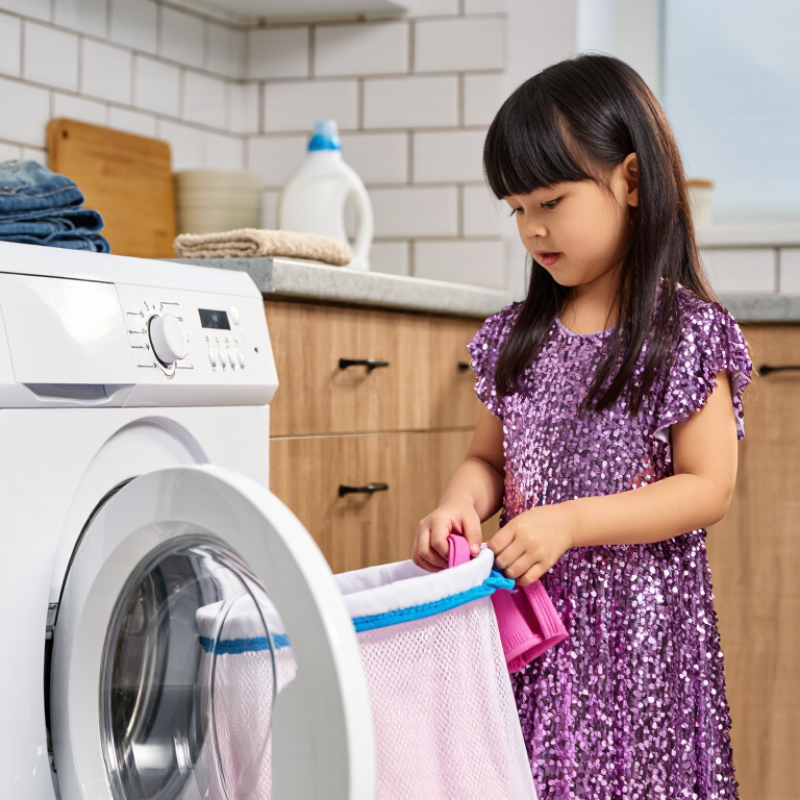
How to Wash a Girls Sequin Dress in a Washing Machine?

Check the Dress Label and Inspect Its Sequins

Before washing a girl’s sequin dress, read every part of its care label. Check the recommended water temperature, cycle, detergent, and drying method. A “hand wash only” instruction should not be ignored. Some dresses contain delicate lining, glued sequins, or heat-sensitive threads. The washing machine may damage them quickly.

Inspect the dress under bright light. Look for loose sequins, lifted edges, broken stitches, and small gaps in the fabric. Gently move your fingertips across the surface. Do not pull decorations that catch on your skin. Sewn sequins usually tolerate more movement, but they can still snag. Glued sequins may loosen in warm water or during spinning. I once trusted a gentle cycle without checking the decoration closely. The dress looked fine before washing, but several sequins disappeared afterward.

If the label permits machine washing, repair or secure obvious loose areas first. Avoid cutting threads without understanding their purpose. Turn the dress inside out and place it in a protective mesh bag, if recommended. A cold, delicate cycle with low spin is often safer than a regular program. Use a small amount of mild detergent, and avoid bleach or fabric softener unless the label approves them. When the instructions seem unclear, pause rather than guess. “Gentle” does not always mean safe. Examine the dress again after washing, because hidden damage may only appear when the fabric is wet.

Prepare the Dress Before Machine Washing

Before machine washing a girl’s sequin dress, read the care label carefully. It should guide the safest water temperature and cycle. I also inspect every sequin by hand. Loose pieces can catch inside the drum or damage nearby fabric. Repair weak stitching before washing, if possible. Remove belts, pins, detachable flowers, and other decorations. Check the pockets, too. Small objects can stain or tear the dress.

Turn the dress inside out. Close all zippers, buttons, and hooks. Place it inside a large mesh laundry bag with enough room to move. Do not pack several delicate items together. Gently blot makeup or food marks with cool water and mild detergent. Avoid rubbing, because sequins may scratch the fabric. Test any cleaning solution on an unseen seam first. I once skipped this test and created a faint pale spot. That mistake was avoidable.

Tips: Use a cold, delicate cycle with a small amount of gentle detergent. Avoid bleach, fabric softener, and strong stain removers. Before starting, examine the bag and dress one more time. The preparation feels slow, but it protects fragile decorations. If many sequins are loose or the fabric feels unusually delicate, hand washing may be safer than machine washing. Check the dress after washing, not later. Wet fabric can stretch while waiting in the machine.

Choose Safe Water, Detergent, and Washing Settings

How to Wash a Girls Sequin Dress in a Washing Machine?

Check the care label before washing. Sequins may be stitched, glued, or heat-sensitive. Turn the dress inside out, then place it inside a large mesh laundry bag.

I learned this the hard way: one loose sequin can catch on a zipper and pull nearby threads. Use cold water, ideally 20–30°C. The U.S. Department of Energy reports that water heating uses about 90% of a washer’s energy, so cold washing also reduces energy demand.

Choose a mild liquid detergent without bleach, optical brighteners, or strong enzymes. Use only a small amount; excess detergent can leave a dull film on shiny surfaces.

Select the delicate or hand-wash cycle, with gentle agitation and the lowest practical spin speed. Avoid fabric softener. It may affect decorative finishes and can make some fabrics feel greasy.

The European Environment Agency identifies household laundering as an important pathway for synthetic microfibres, so a mesh bag helps limit friction and captures some loose fibers.

Do not overload the drum. The dress needs room to move softly. After washing, reshape it while damp and hang it away from radiators, direct sunlight, and heated dryers.

High heat can warp sequins or weaken adhesive. My cautious choice is air-drying, although it takes longer.

Inspect the dress afterward, because a care label cannot predict every weak seam or aging decoration.

Protect the Dress During the Washing Machine Cycle

A girls’ sequin dress needs protection before the washing machine starts. Turn it inside out and place it inside a large mesh laundry bag. Close every zipper and fastener first. Loose sequins can catch on the drum or pull nearby threads. A pillowcase may work in an emergency, but its opening can shift. I have made that mistake.

Choose a cold, delicate cycle with low spin speed. Use a small amount of mild liquid detergent. Avoid bleach, stain removers, and fabric softener, which may weaken decorative coatings or leave residue between sequins. Do not overload the drum. The dress needs room to move gently, not rub against heavy towels or denim. AATCC TM61 evaluates colorfastness through accelerated washing, but its results do not guarantee that every home cycle is safe. Check the care label and test a hidden seam when possible.

Remove the dress immediately after washing. Never twist it. Press out water with a clean towel, then reshape the shoulders and hem. Lay it flat away from direct heat and sunlight. A dryer can soften adhesives, distort lining, or dull reflective surfaces. Handle carefully. WRAP’s Valuing Our Clothes report found that extending clothing life by nine months can reduce its carbon, water, and waste footprints by about 20–30%. That makes a slower wash worthwhile, although one careful cycle cannot prevent every loose sequin. Inspect the dress before storing it.

Air-Dry and Store the Sequin Dress Properly

After washing a girl’s sequin dress, careful drying matters as much as the wash cycle. Remove it promptly to prevent deep wrinkles. Never twist or wring the fabric. Instead, press it gently between clean towels. This removes excess water without stressing the sequins or stitching. Check the care label before choosing any method. It remains the most reliable guide.

Tips: Lay the dress flat on a dry towel. Reshape the shoulders, sleeves, and hem with clean hands. Keep it away from radiators, hair dryers, and strong sunlight. Heat can weaken adhesive details and fade delicate fabric. A mesh drying rack can improve airflow underneath. Turn the dress once during drying if the towel feels damp.

Allow complete air-drying before storage. Moisture trapped between sequins may create an unpleasant smell or encourage fabric damage. I once stored a similar dress too soon, and the lining developed stubborn creases. That mistake was avoidable. Use a padded hanger only when the dress is fully dry and lightweight enough to hang safely. For heavier styles, fold them loosely with acid-free tissue between the decorated sections. Avoid sharp folds across dense sequin patterns. Store the dress in a breathable garment bag, not sealed plastic. Keep it in a cool, dark cupboard. Leave space around it so sequins do not rub against rough clothing or zippers.

How to Wash a Girls Sequin Dress in a Washing Machine? - Air-Dry and Store the Sequin Dress Properly

Care Stage Recommended Setting or Action Reason Important Caution
1. Read the care label Follow the garment label first. Check whether machine washing is permitted. The dress may contain delicate mesh, lining, adhesive, or decorations that require special care. If the label says “dry clean only,” do not place the dress in a washing machine.
2. Inspect the sequins Repair loose threads and remove detachable accessories before washing. Prevents loose parts from catching on the drum or damaging other garments. Do not pull or cut sequins that are securely attached.
3. Prepare the dress Turn the dress inside out and place it in a large mesh laundry bag. Reduces friction between the sequins, fabric, and washing-machine drum. Use a bag large enough for the dress to move freely without being tightly compressed.
4. Separate the load Wash alone or with other soft, lightweight items in similar colors. Prevents snagging, color transfer, and abrasion from zippers or rough fabrics. Avoid towels, denim, garments with hooks, and items with exposed zippers.
5. Select the cycle Choose a delicate or gentle cycle with cold water or a maximum temperature of 30°C / 86°F. Cool water and gentle movement help protect fibers, stitching, and sequin surfaces. Avoid hot water and heavy-duty cycles.
6. Add detergent Use a small amount of mild liquid detergent designed for delicate fabrics. Liquid detergent generally dissolves easily and is less likely to leave visible residue. Do not use chlorine bleach, fabric softener, or harsh stain removers unless the care label permits them.
7. Set the spin speed Use the lowest practical spin speed, preferably about 400–600 rpm. Lower spinning reduces stretching, creasing, and stress on sequin attachments. Skip or shorten the spin cycle if the dress is heavily decorated or very delicate.
8. Remove promptly Take the dress out of the machine as soon as the cycle ends. Reduces deep wrinkles, musty odors, and prolonged pressure on the decorations. Do not leave the wet dress crumpled inside the drum or laundry bag.
9. Reshape gently Lay the dress flat on a clean, dry towel and gently restore its shape. Flat drying helps prevent shoulder stretching and distortion of the skirt. Do not wring, twist, or scrub the sequined surface.
10. Air-dry properly Air-dry flat in a shaded, well-ventilated area at room temperature. Gentle airflow helps moisture evaporate without exposing the fabric and decorations to excessive heat. Avoid tumble drying, radiators, hair dryers, and direct sunlight unless the label specifically allows them.
11. Check before storing Store only when the dress is completely dry and all sequins are secure. Removing moisture helps reduce mildew, odor, and fabric deterioration. Never pack a damp dress in a plastic bag or closed container.
12. Store the dress Fold it with tissue paper or place it in a breathable garment bag in a cool, dry, dark closet. Soft separation reduces sequin friction, while breathable storage limits trapped humidity. Avoid heavy items on top, sharp hangers, damp areas, and prolonged direct light.
Quick reference: Machine wash only when the care label permits it; use a mesh bag, cold water, a delicate cycle, mild liquid detergent, low spin, and flat air-drying.

FAQS

What should I check before washing a sequin dress?

Read the care label for water temperature and cycle instructions. Inspect each sequin and repair weak stitching when possible. Remove belts, pins, flowers, and pocket items.

How should I prepare the dress for machine washing?

Turn it inside out and close every zipper, button, and hook. Place it in a large mesh laundry bag. Leave enough room for gentle movement.

Can I machine wash a dress with loose sequins?

It may be risky. Loose sequins can catch inside the drum or pull nearby threads. Hand washing may be safer when many pieces are loose.

Which washing settings are safest?

Use cold water, a delicate cycle, and low spin speed. Add a small amount of mild liquid detergent. Do not overload the drum.

Should I use bleach or fabric softener?

Avoid bleach, fabric softener, and strong stain removers. They may weaken decorative coatings or leave residue between sequins. Less product is better here.

How can I remove makeup or food marks?

Gently blot the mark with cool water and mild detergent. Do not rub the fabric. Test the solution on a hidden seam first.

What should I avoid putting in the drum with the dress?

Keep it away from towels, denim, and heavy garments. Their rough surfaces can cause rubbing. A pillowcase may help temporarily, but its opening can shift.

How should I dry the dress after washing?

Remove it immediately and never twist it. Press out water with a clean towel, then reshape the shoulders and hem. Lay it flat away from heat and sunlight.

What mistake should I watch for?

Do not leave the wet dress waiting inside the machine. Wet fabric can stretch. I once skipped a hidden-seam test and caused a pale spot. That was avoidable.

Conclusion

Learning how to wash a girls sequin dress in a washing machine begins with checking the care label and examining the sequins for loose threads, missing pieces, or delicate decorations. Secure loose details, close zippers or fasteners, and turn the dress inside out. Placing it in a mesh laundry bag can reduce friction and help protect the fabric and sequins during washing.

Use cold or cool water, a gentle detergent, and the machine’s delicate or hand-wash cycle. Avoid bleach, fabric softener, hot water, and strong spin settings, as they may damage the sequins or distort the dress. When the cycle ends, remove the dress promptly and never wring or twist it. Gently reshape it, press out excess water with a clean towel, and lay it flat or hang it carefully to air-dry away from direct heat and sunlight. Once completely dry, store it in a cool, dry place with enough space to prevent crushing or snagging.

Henry

Henry

Henry is a dedicated marketing professional with a profound expertise in the company's offerings. With years of experience in the industry, he possesses an impressive understanding of the market dynamics and consumer behaviors that drive success. Henry is committed to sharing his insights through......