A little girl’s dress closet can look charming at first glance, then become a tangle of tiny hangers, party dresses, and sleeves caught in the door. Learning how to organize a little girls dress closet starts with noticing what your child actually wears. A soft cotton dress for school may need more space than a stiff, glittery one saved for special days. The goal is easier mornings, not a picture-perfect closet.
Organizing consultant Marie Kondo offers a useful principle: “Keep only those things that speak to your heart.” Applied to children’s clothes, that means keeping dresses that fit, feel comfortable, and suit your family’s routines—not just the ones that look lovely on a hanger. Sort dresses by type or frequency of use, and place everyday favorites where small hands can reach them. Store outgrown or out-of-season pieces separately, with clear labels and room to reassess later. A low basket can hold leggings or cardigans that complete an outfit. Keep the arrangement simple. Children grow quickly, and even a careful system may need adjusting after a growth spurt or a busy laundry week. One detail is easy to miss: leave enough space between hangers, so dresses do not emerge creased or tangled. The outline ahead explores sorting, storage, child-friendly access, and small maintenance habits that make the closet more practical.
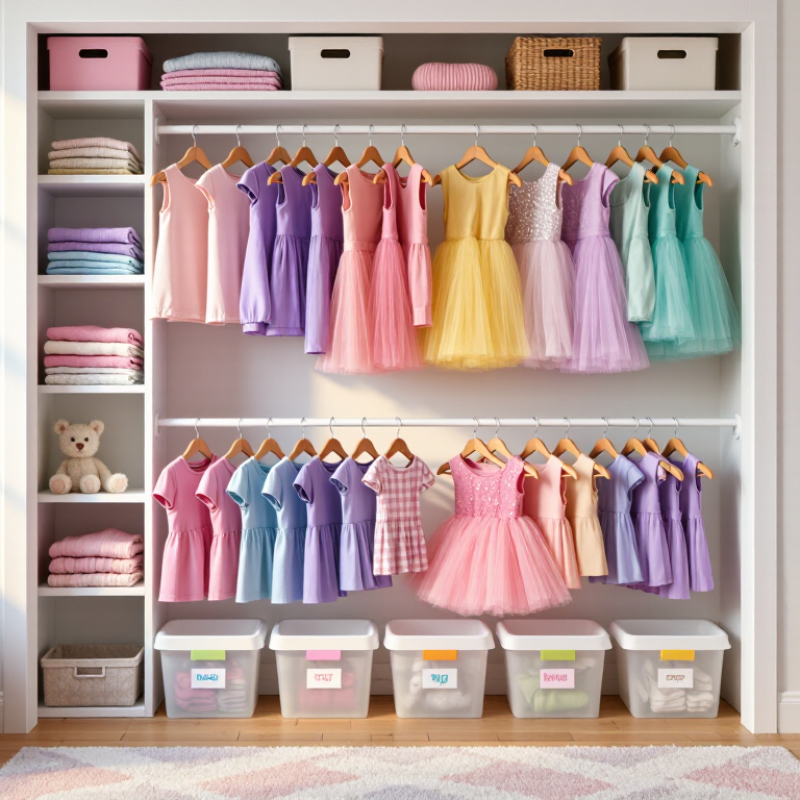
Assess the Closet Space and Your Child’s Dress Collection
Before organizing a little girl’s dress closet, measure its width, depth, and usable hanging height. Note the rod position, shelf spacing, and any low corners that clothes may hide behind. Then gather every dress in one place. Check each one for fit, comfort, season, and condition. A dress that pinches at the shoulders or drags on the floor may not earn closet space, even if it looks lovely. Keep a small “check again” pile; children grow quickly, and some decisions need a second look.
Count the dresses your child actually wears, not just the ones on hangers. The U.S. Environmental Protection Agency reported that Americans generated 17 million tons of textile waste in 2018, with 2.5 million tons recycled. That figure covers all textiles, not children’s clothing, but it is a useful reminder to assess what you own before buying more storage. Compare the collection with the space: leave room between hangers, and check that your child can reach everyday favorites safely.
Tips: Measure first. Sort dresses into everyday, occasion, and outgrown groups. Try a few hangers before buying a full set; bulky sleeves can crowd a narrow rod. Use a low basket for items awaiting a fit check, and label it clearly. Reassess in a month. A system that looks tidy today may not work after a growth spurt.
How to Organize a Little Girl’s Dress Closet
Assess the available closet space and your child’s dress collection before assigning each area.
Example allocation for a 36-inch-wide closet section: measure your own closet and collection, then adjust the space for everyday dresses, special-occasion dresses, folded items, and accessories.
Sort Dresses by Size, Season, Occasion, and Condition
A practical little-girls’ dress closet starts with size, not color. Remove each dress and check its label, fit, and condition. Group wearable dresses by size, then separate the current size from the next one up. Store outgrown pieces elsewhere, with the size written on the box. Sort the current-size dresses by season: lightweight cotton for warm days, and heavier knits for cooler weather. Keep a few flexible pieces near the front. Tiny dresses migrate.
Make occasion and condition the final checks. Put everyday dresses together, and keep party or ceremony outfits on one clearly marked section of the rail. Place stained, torn, or missing-button dresses in a small repair basket instead of returning them to the closet.
The 2012 WRAP report, Valuing Our Clothes, offers a useful reason to keep wearable garments in use. It estimates that nine extra months of active use can reduce clothing’s carbon, water, and waste footprints by 20–30%.
A loose hem may be an easy repair; a stubborn stain may not be. Be honest about what will actually be fixed. Revisit the size groups every few months, since growth spurts rarely follow a tidy schedule. One drawer will probably get messy again.
Arrange Dresses for Easy Access and Safe Use
Set the closet up so a child can choose a dress without climbing or pulling at a crowded rail. Place everyday dresses on a low, securely installed rod, with enough space between hangers for small hands. Use smooth, child-sized hangers, and keep loose clips or pins out of reach. No climbing needed. Put heavier shoes and storage bins on lower shelves, not above the hanging clothes. Keep the floor clear so a dropped sock or toy does not become a tripping hazard. If the closet has a tall dresser or shelving unit, secure it according to its instructions.
Group dresses by use, such as school, play, and special occasions. A simple picture label can help a young child return clothes to the right place. Leave favorite choices near the front, and move outgrown dresses promptly; crowded hangers are harder to slide safely. Check the rod, shelf edges, and hangers now and then for loosened fittings or cracks. Keep door cords and small accessories away from the child’s reach. It is tempting to make every section perfectly tidy, but children’s needs change quickly. Adjust the layout when reaching, dressing, or putting clothes away becomes difficult.
How to Organize a Little Girls Dress Closet? - Arrange Dresses for Easy Access and Safe Use
| Closet Area |
Organization Method |
Easy-Access Tip |
Safety Check |
| Everyday dresses |
Hang clean, frequently worn dresses together on a reachable rod. Group them by sleeve length or season. |
Keep the current season at the front and leave a little space between hangers so garments are easy to see and remove. |
Use sturdy, child-size hangers without sharp edges; avoid overloading the rod. |
| Special-occasion dresses |
Store less frequently used dresses together at one end of the rod, or on a higher shelf if they are out of daily rotation. |
Use a simple label such as “Occasion” on the shelf or storage section. |
Keep heavy storage boxes low and secure; do not place them where they can fall onto a child. |
| Small or delicate items |
Fold tights, bloomers, and delicate pieces into separate drawer dividers or open-top bins. |
Choose shallow containers so items stay visible instead of getting buried. |
Avoid small loose accessories in reach of children who may put them in their mouths. |
| Outgrown dresses |
Remove clothes that no longer fit and sort them into keep, donate, or pass-along groups. |
Review fit at the start of each season to make room for clothes that can be worn now. |
Store keepsakes in a clean, dry container with a clear size or date label. |
| Closet floor and doorway |
Keep the floor clear and place a low hamper nearby for worn clothes. |
Leave a clear path to the closet so a child can reach clothes without stepping over items. |
Secure tall furniture and freestanding organizers to the wall according to the manufacturer’s instructions. |
| Closet hardware |
Use a fixed rod or a properly installed lower rod if the closet needs a child-height section. |
Place everyday choices at a height the child can reach comfortably with both feet on the floor. |
Do not encourage climbing on shelves or drawers; check that rods, hooks, and shelves are firmly attached. |
Simple routine: Put clean dresses back in their assigned section, return accessories to their containers, and check for outgrown items regularly.
Maintain the Closet as Sizes and Seasons Change
As sizes and seasons change, a little girl’s closet needs regular, gentle edits—not a full overhaul every few months. Check the fit when you rotate clothes: sleeves that stop above the wrist, tight waistbands, and dresses that ride up are useful clues. Keep a small “wear now” section at child-friendly height, with school dresses and everyday favorites easy to reach. Move outgrown pieces to a labeled bin, noting the size and season on the tag. I still find an almost-fitting dress tucked behind the winter sweaters sometimes. It happens.
Seasonal sorting can also help families make better use of clothing. The U.S. Environmental Protection Agency estimated that Americans generated 17 million tons of textiles in 2018, with about 2.5 million tons recycled. That figure covers textiles broadly, not children’s clothing alone, but it shows why keeping wearable garments in circulation matters. Before storing a dress, check its seams, fasteners, and hem. Set aside clean, gently worn pieces for hand-me-downs or textile recycling where available. Avoid storing damp clothes; even a little moisture can leave a musty smell.
Tips: At each season change, try on key dresses, remove anything uncomfortable, and group the rest by size. Use one clear bin per size, and place the next size up where you can reach it. Recheck after a growth spurt; children do not follow closet schedules.
Conclusion
Organizing a little girl’s dress closet starts with taking stock of the available space and the dresses she owns. Sort each item by size, season, occasion, and condition so that everyday favorites are easy to find and outgrown or damaged pieces can be set aside. This simple first step helps you decide what should stay in the closet and what storage solutions will work best.
For how to organize a little girls dress closet, choose child-friendly options that keep hanging and folded dresses neat and reachable. Arrange frequently worn clothes at an accessible height, use suitable hangers or shelves, and leave enough room to move items without creating clutter. Check the closet regularly as your child grows and the seasons change, updating the arrangement so current sizes and weather-appropriate dresses remain easy to use.

 Darias Dress